

Mac and Brooke McGougan knew they had made the right decision
August 17, 2025
Farmer
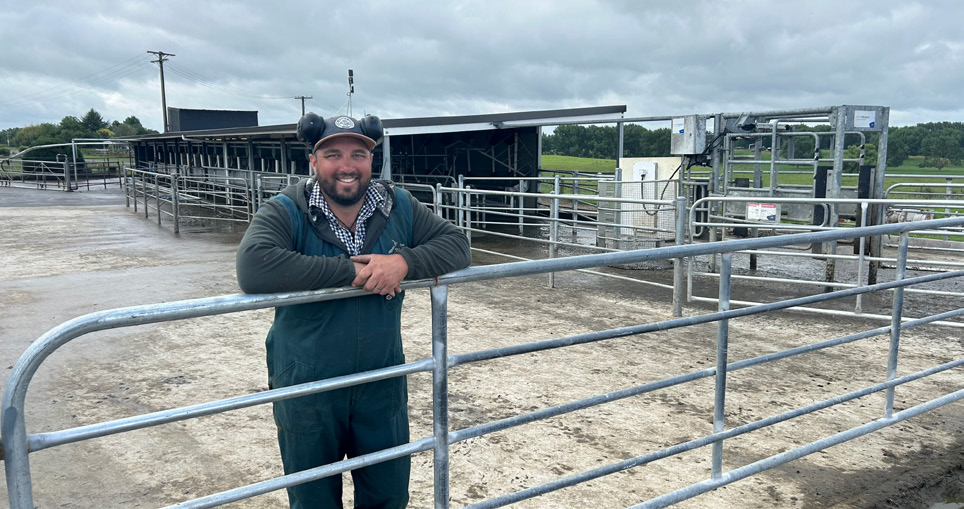
Mac and Brooke McGougan
Location
Gordonton, Waikato
Farm Size
140ha (including 40ha lease)
Herd Size
375 Friesian and Friesian-cross cows at peak on system 2-3
Within a few days of fitting SenseHub® Dairy collars on their herd, Waikato sharemilking couple Mac and Brooke McGougan knew they had made the right decision.
Now in their second season sharemilking on Mac’s parents’ farm at Gordonton, it’s been a hectic start to their journey towards farm ownership.
Mac’s parents Steve and Desley McGougan had been farming 260 cows on close to 100ha for most of the previous 40 years when Mac and Brooke returned home five seasons ago. For their first two years, they were employed on wages followed by another two years contract milking which generated sufficient equity for them to buy the herd and move to a 50-50 sharemilking contract.
When an adjoining block of 42ha which had been dairy farmed for many years was offered to them on a lease arrangement before the start of their first season sharemilking, they grabbed the opportunity to expand and bought extra cows to boost their numbers to milk 375 head at peak.
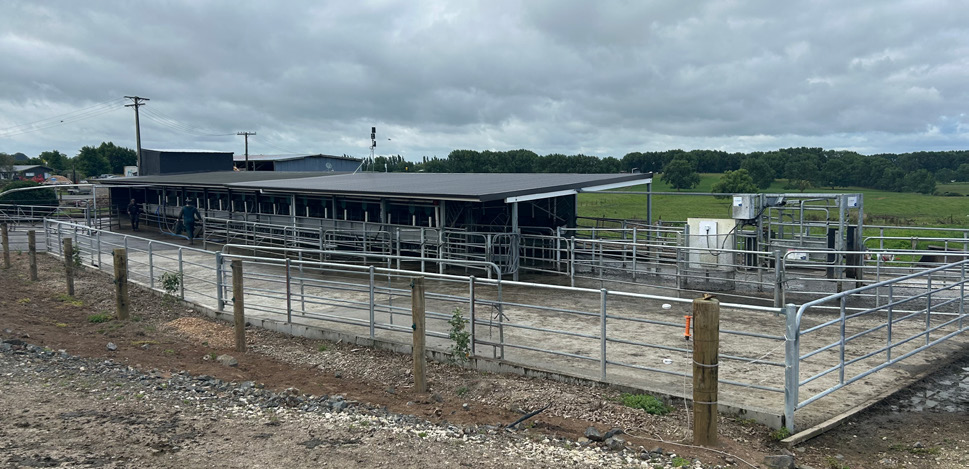
They soon found mixing two herds together was challenging and the farm’s aging 20-aside herringbone shed was well beyond its most efficient herd size.
“We had rotary cows we’d bought in coming into a herringbone shed for milking, and mixing two herds each with its own leaders meant there were a few battles while they settled into a hierarchy. We also had more heifers too, so they were long milkings in the old 20-aside,” Mac says.
Production in their first season was just over 130,000kg milk solids. It was a sound start and enough to fuel their enthusiasm to continue investing in their future.
They spent most of their first off-season renovating the old shed after deciding the cost to build a new one was too much. The pit was extended to accommodate 36 sets of cups, the shed roof was lifted and the yard was expanded so they could milk 375 cows in significantly less time than before.
Next on their list for investment were SenseHub Dairy collars which were fitted two weeks before the start of the herd’s 2024 mating.
The impact was immediate and transformational for the farm business.
Mac admits he felt the stress of heat detection using tail- paint and the heavy workload every day for six weeks of artificial breeding to select on-heat cows every morning.
Although he mastered the process and achieved good results in his first few years back home, he felt huge pressure on his shoulders.
Heat detection was always a stressful period beforenwe put the SenseHub Dairy collars on. Everything else was pretty straightforward in my first few years dairy farming,” he says.
“That’s why we jumped on the collars. I love technology, but we could just see the advantages of having that data at our fingertips.
“If I was starting farming again, I’d put them on straight away. Yes, we pay a bill every month because we
chose the subscription option, but the technology is brilliant.” Mac says.
After decades using tail paint to select cows on heat for artificial breeding, Mac’s father Steve also took little convincing they could rely solely on the collar data instead.
“We talked about tail painting the cows as a backup, and then decided not to because we didn’t want to double guess ourselves,” Steve says.
“Adding the collars has definitely been a serious game changer. Nobody has to get up and check every cow’s tail paint and there no re-painting them. I also feel Mac is lot calmer because of having the collars,” his father says.
Mac’s daily early morning routine over mating time is more relaxed now and Brooke says he’s often back home earlier after milking for breakfast than previous years.
She has noticed the pressure Mac felt over this season’s mating was much less than previous years.
“He was more present at home, and just happier in general,” she says.
“It’s been amazing to recall how effortless it is with automatic heat detection,” Mac says.
Having bought extra cows to expand the herd when the lease farm was added, they soon realised the calving spread was an issue.
“After talking with our LIC technician, we were behind in submission rate at the start of AB so we decided to do a CIDR run at 21 days,” Mac says.
Using the collar data, Mac created a group of cows which had not cycled so they could receive a CIDR. Almost half cycled and were mated before the CIDRs were fitted, but the remaining cows were treated and mated earlier than they would have if left untreated.
The couple have also considered dropping bulls out of the mating programme and using short gestation beef sire semen for the final 3-4 weeks.
“I did put the bulls out with the cows in late November because I was going to be away for a few days, but I’ll go back to AI and use short gestation Hereford semen until about December 15, then stop.”
Mac and Brooke say their next focus will be on building their knowledge of the features offered by the SenseHub Dairy collars, supported by the regional technician and training team.
With one season of AB almost under their belt, they will be able to use that history on each cow in the herd to improve heat detection and tighten calving spread in the coming years.
The herd’s three-week submission rate this past mating was 86%, very close to their goal of 90%-plus.
“I know it can take four or five years to condense the calving window. We still had a couple to calve and we’d started AI, so those cows wouldn’t have cycled for at least a month.
But with short gestation semen, we can work on reducing that spread,” Mac says.
With the SenseHub Dairy mobile phone app, he’s never out of touch with the herd’s well-being even when he’s been able to sneak away for a fishing competition or to play a round of golf.
With finance tight so early in their sharemilking career, they opted for a subscription approach to buying the collars with no upfront costs or fees.
“There are cheaper collar alternatives on the market, but you get what you pay for and the SenseHub Dairy collars are the best,” Mac says.
Their herd size and 36-aside shed configuration, without automatic cup removers, means milkings will always be a two-person operation. But the collars do give them the ability to employ less experienced staff because they can rely on the data to deliver the insights required, especially for heat detection.
The farm is currently staffed by Mac and a moderately experienced full-time worker, plus a part-time junior staff member assisting with some milkings.
Mac’s father Steve is pleased to see more technology being adopted in the farm business.
“I knew Mac and Brooke would go this way. At this stage of their farming career, their cows are their greatest asset so they have to be looked after really well,” he says.
“I’m sure almost every dairy farmer will have collars on their cows in the future. You’ve got to move with the times and I think they are a really good tool.”
Mac and Brooke aim to continue growing milk production, but stick with their low-cost approach using maize silage grown on the platform or their run-off, and minimal palm kernel.
Production to the end of November 2024 was up 10% on the same point last season.
“Our aim is for 10% more production next season from a shorter calving interval. We should see a jump in first
month of calving next year with more days in milk from the work we’ve done on tightening the calving spread during mating this season,” Mac says.
They feel the farm and the system they operate has a ‘sweet spot’ at between 400 and 450kg/cow milk solids which could give them more than 160,000kg if adequate rainfall delivers good growing conditions over the summer.
“Our first year was bit of a challenge. We were managing two herds, adjusting to the larger herd size and adjusting paddock sizes, and milking through the 20-aside. But I just feel like we’re gaining confidence and every year is positive growth for us.
“The cow collars are a big part of getting better every year. They have really helped over mating with reducing stress and now we’ve got young family, it’s more important to be happier in the job because everyone benefits,” Mac says.
sign up or have a chat – leave your details below
Our local Sales Specialist will get in touch soon.
NZ-SHB-241200001

 Argentina
 Australia
 Belgium (Dutch)
 Brazil
 Chile
Chile Colombia
 Czech Republic
 Finland
 France
 Germany
 Ireland
 Italy
Italy Japan
Japan Mexico
 Netherlands (Dutch)
 New Zealand
 Norway
 Panama
 Poland
 Portugal
 Spain
Spain Sweden
 United Kingdom
 Vietnam
 Global